When it comes to implementing new technology for claims management, one of the biggest decisions insurance companies and claims professionals face is whether to go with a Software-as-a-Service (SaaS) solution, like Claimable, or invest in a custom-built claims management system.
Both options have clear advantages and the right choice depends on your business goals, budget and long-term strategy.
In this post, we’ll explore the key differences between the two, the pros and cons of each and how to decide which is the best fit for your organisation’s claims lifecycle and overall operational efficiency.
1. What Is SaaS?
Software-as-a-Service (SaaS) is a cloud-based model where users subscribe to software that’s hosted and maintained by a third-party provider. Examples include Claimable, Slack or Hubspot.
Users typically pay a monthly or annual fee and access the platform via a web browser.
Why SaaS Works for Modern Claims Management
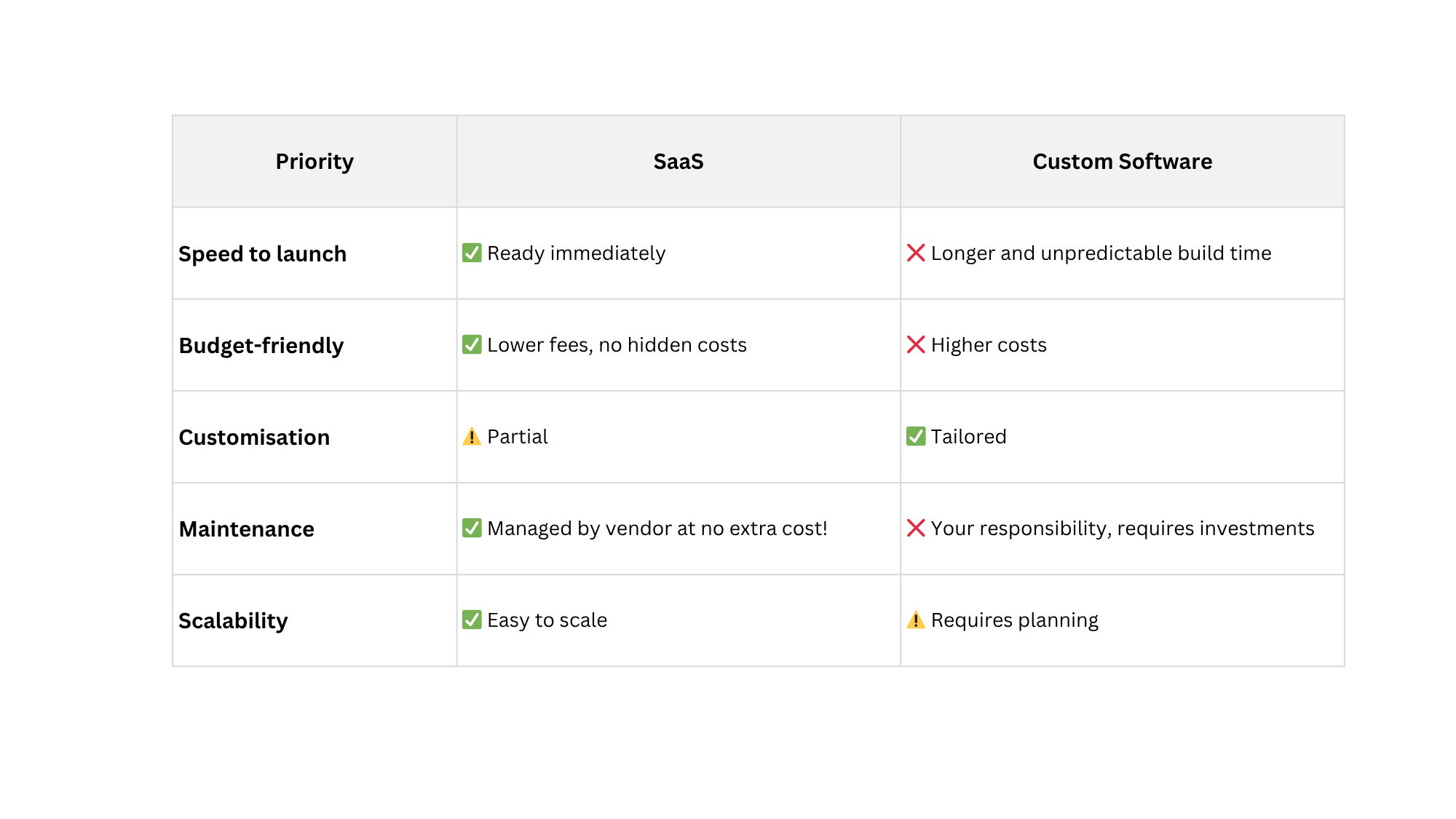
Faster deployment: SaaS products are ready to use almost immediately after signup, allowing claims teams to streamline the claims processing workflow without delay.
Lower upfront cost: You pay a subscription fee, usually monthly, rather than a large upfront investment, ideal for growing insurance and claims companies or customer-focused teams.
Maintenance-free: Updates, bug fixes and security patches are handled by the vendor, allowing your team to focus on your core business and the claims management process and customer service.
Scalability: Most SaaS claims management platforms can easily scale with your team and claims data volume.
Proven reliability: Vendors provide assurances of high-availability and often offer 24/7 support. Because SaaS products are usually accessed daily by users worldwide, vendors maintain availability to the highest standards.
Disadvantages of SaaS
Partial customisation: You can usually configure the software, but only to the extent the vendor offers and you usually can’t change the product's core features or code.
Vendor dependency: You rely on the provider’s uptime, security practices, and roadmap.
2. What Is Custom-Built Software?
Custom-built software is software that is designed and developed specifically for your company's needs.
This approach often involves hiring developers or partnering with a software agency to build a solution from scratch.
Custom Software for Complex Claims Processes
Full customisation: Every feature can be tailored to fit your exact claims management process and internal workflows.
Ownership: You control the codebase, data and product roadmap.
Disadvantages of Custom Software
Higher upfront cost: Development requires significant investment in time and money.
Longer development time: Building from scratch takes months (or even years) before being able to go live.
Ongoing maintenance: You are responsible for updates, bug fixes, and security. These often require extra funds and time investment.
Scalability challenges: Without proper planning, scaling can become complex and expensive.
Which One Should I Choose?
The decision comes down to your priorities but generally a main distinction can be made:
Choose SaaS if you need a reliable, off-the-shelf claims management system that solves common challenges quickly. It’s perfect for teams that prioritise operational efficiency, ease of use, and high customer satisfaction without large upfront costs.
SaaS tools also support real-time access to claims data, helping you make data-driven decisions that improve overall performance.
Choose custom-built software if you’re ready to invest in a long-term project and are open to high budgets and long lead times. It’s ideal for companies managing complex claims that have established processes they cannot change.
Whether you choose a SaaS platform or a custom-built solution, the ultimate goal is to improve claims accuracy, streamline claims administration, and enhance customer service across the entire claims lifecycle.
Evaluate your resources, scalability needs and future innovation plans to select the claims management software that best drives growth and efficiency for your business.
You can read more about choosing a new claims management software in our article: Claims Management Software: How to Choose and Red Flags to Avoid